
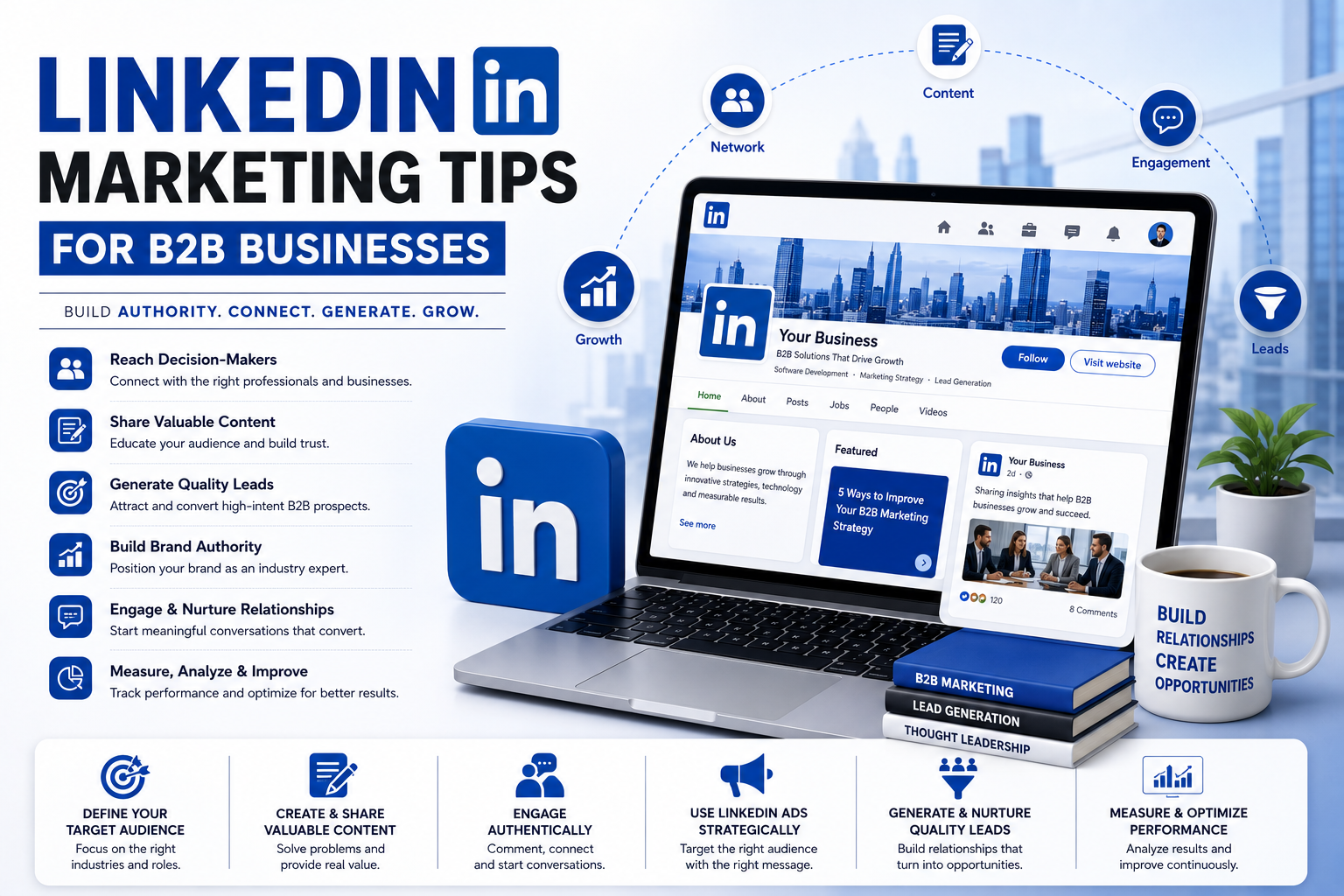
LinkedIn has become an important digital platform for B2B businesses looking to reach professionals, build credibility and connect with potential customers.
Unlike many social platforms that primarily focus on entertainment and personal content, LinkedIn is built around professional relationships, industries, companies and business conversations.
This makes it particularly useful for businesses selling products or services to other businesses.
However, simply creating a company page and publishing occasional posts is rarely enough. Successful LinkedIn marketing requires a clear strategy, useful content and consistent engagement.
Why LinkedIn Matters for B2B Marketing
B2B marketing often involves reaching people with specific professional responsibilities and decision-making authority.
LinkedIn allows businesses to build visibility within professional audiences and participate in conversations related to their industries.
Businesses can use LinkedIn to:
- Build brand awareness
- Reach business decision-makers
- Share industry expertise
- Generate B2B leads
- Build professional relationships
- Promote products and services
- Strengthen brand credibility
Effective B2B marketing on LinkedIn is less about posting frequently and more about consistently providing value to the right audience.
1. Optimize Your LinkedIn Presence
Before focusing on content or lead generation, make sure your LinkedIn presence clearly communicates who you are and what your business provides.
Your company page often becomes one of the first places potential customers visit when researching your business.
Optimize important elements such as:
- Company logo
- Cover image
- Business description
- Industry information
- Website link
- Products and services
- Relevant keywords
Individual profiles of founders, sales teams and other key employees should also be professional and consistent with the company's positioning.
2. Understand Your Target B2B Audience
Effective LinkedIn marketing starts with understanding exactly who you want to reach.
Instead of trying to attract every professional, define the businesses and decision-makers most relevant to your offer.
Consider factors such as:
- Industry
- Company size
- Job title
- Seniority level
- Location
- Business challenges
- Purchasing responsibility
Understanding these characteristics makes it easier to create content and campaigns that speak directly to your target audience.
3. Create Valuable B2B Content
Content is one of the most important parts of LinkedIn marketing.
Instead of publishing only promotional messages, focus on content that helps professionals understand problems, opportunities and solutions.
Useful B2B content can include:
- Industry insights
- How-to content
- Case studies
- Market observations
- Business tips
- Research and data
- Customer success stories
- Educational videos
- Infographics
Valuable content can help potential customers become familiar with your expertise before they ever speak with your sales team.
4. Build Thought Leadership
B2B buyers often prefer working with businesses they consider knowledgeable and trustworthy.
LinkedIn provides an opportunity for company leaders and professionals to demonstrate expertise through useful perspectives and industry conversations.
Thought leadership content may include:
- Industry trends
- Professional experiences
- Original observations
- Business lessons
- Market changes
- Expert opinions
The objective should not be to appear knowledgeable for its own sake. Strong thought leadership should provide practical value to the audience.
5. Connect with Decision-Makers
One of LinkedIn's biggest advantages for B2B businesses is the ability to identify professionals based on their roles and companies.
This can make prospecting more focused than broad outreach across unrelated audiences.
Relevant contacts may include:
- Founders
- Business owners
- Marketing managers
- Sales directors
- Procurement professionals
- Department heads
- Senior executives
Avoid sending generic sales messages immediately after connecting. Building familiarity and providing context usually creates a more professional interaction.
6. Use Employee Advocacy
Your company's LinkedIn presence does not need to depend entirely on the company page.
Employees can help increase visibility by sharing company content, participating in relevant discussions and publishing their own professional insights.
Employee advocacy can help:
- Increase organic reach
- Humanize the brand
- Build employee credibility
- Create additional industry visibility
- Strengthen professional relationships
7. Use LinkedIn Ads Strategically
Organic marketing can build authority and relationships, while paid LinkedIn advertising can help businesses reach targeted professional audiences at scale.
LinkedIn advertising can be useful for:
- Lead generation
- Webinar promotion
- Content distribution
- Brand awareness
- Product demonstrations
- B2B service promotion
Campaigns should be aligned with clear business objectives rather than running advertisements without a defined conversion goal.
8. Generate Qualified B2B Leads
Generating a large number of leads is not always the most important objective in B2B marketing.
Lead quality matters because businesses usually need prospects who match specific company, industry or decision-making criteria.
LinkedIn lead generation can involve:
- Educational content
- Lead generation forms
- Webinars
- Industry reports
- Case studies
- Consultation offers
- Targeted advertising
- Professional outreach
In B2B marketing, one relevant decision-maker can be more valuable than hundreds of unqualified contacts.
9. Engage with Your Professional Network
LinkedIn marketing should not operate as one-way communication.
Businesses and professionals should actively participate in relevant conversations.
This may include:
- Responding to comments
- Commenting on industry posts
- Participating in professional discussions
- Sharing useful insights
- Supporting relevant connections
Consistent engagement helps build visibility and creates stronger relationships within professional communities.
10. Measure LinkedIn Marketing Performance
LinkedIn marketing should be measured based on business objectives rather than focusing only on follower counts.
Useful metrics can include:
- Post impressions
- Engagement rate
- Profile views
- Website clicks
- Lead generation
- Conversion rate
- Cost per lead
- Qualified opportunities
Reviewing performance regularly can help identify which content, audiences and campaigns are contributing to meaningful business results.
Common LinkedIn Marketing Mistakes to Avoid
Even businesses that post regularly can struggle with LinkedIn if their strategy focuses on the wrong activities.
Common mistakes include:
- Posting only promotional content
- Using generic connection messages
- Ignoring comments and engagement
- Targeting audiences too broadly
- Posting without a clear strategy
- Focusing only on follower numbers
- Sending aggressive sales messages
- Failing to measure results
How to Build a Sustainable LinkedIn Strategy
Successful LinkedIn marketing is usually built through consistent activity over time.
A practical strategy may involve:
- Define your target audience.
- Optimize your company and personal profiles.
- Identify topics relevant to your audience.
- Create useful and original content.
- Engage with relevant professionals.
- Build relationships before selling.
- Use paid campaigns where appropriate.
- Track leads and business opportunities.
- Optimize based on performance data.
The objective is to create a repeatable system that combines visibility, authority, relationships and lead generation.
Businesses looking to strengthen their brand presence across professional and social platforms can also explore our Social Media Marketing Services to learn more about content strategy, audience engagement and platform-focused growth.
Final Thoughts
LinkedIn can be a powerful B2B marketing channel when businesses use it strategically.
The strongest results usually come from combining valuable content, professional relationships, clear audience targeting and consistent measurement.
Rather than treating LinkedIn simply as another social media platform, businesses can use it as a professional ecosystem for building credibility, reaching decision-makers and creating qualified opportunities.
Build authority first, create meaningful professional relationships and let business opportunities develop from genuine value.